
Where's the Colour Gone?! What is colour deficiency?
Lights, colours, darkness.
Colour blindness, more commonly referred to as colour deficiency, is when the affected person is unable to see colours in a way like everyone else.
Colour blindness (colour vision deficiency, or CVD) affects approximately 1 in 12 men (8%) and 1 in 260 women. This means that in New Zealand there are approximately 200,000 colour deficient people (about 4.5% of the entire population).
CVD often occurs when someone can’t spot the difference between certain colours. The confusion is usually between greens and reds, and sometimes blues.
In the retina of your eye, there are two different cell types that detect light. They are referred to as rods and cones. Rods only picks up on light and dark, whereas cone cells are the ones picking up on the colours and are focused towards the centre of one’s vision.
Each person has three types of cones that see colour: red, green and blue. Each cone playing an important part in a person’s overall vision and colour perception. People with typical colour vision can see about 1 to 7 million distinct colours. Those with colour blindness see only about 10% of those colours.
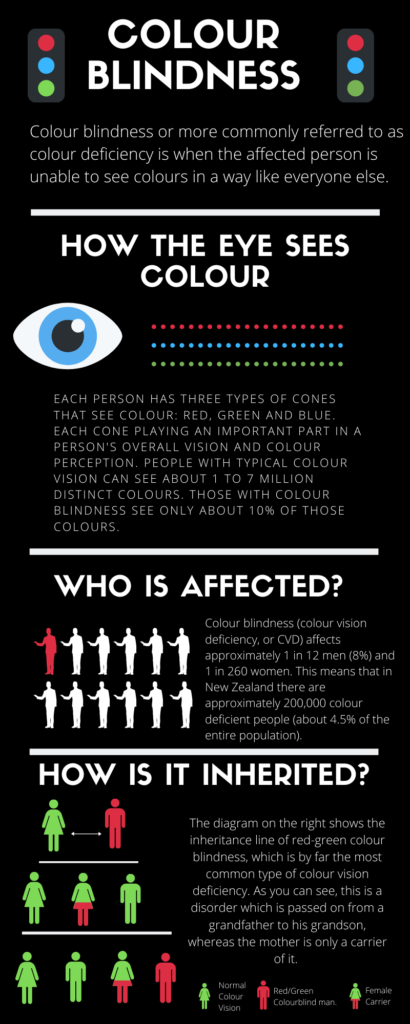
Colour blindness can happen when one or more of the colour cone cells are missing, not working, or see a different colour shade than everyone else. The effects of colour vision deficiency can be mild, moderate or severe, for example, approximately 25% of New Zealand colour blind pupils currently leaving secondary school are unaware that they are colour blind, whilst 60% of sufferers experience many problems in everyday life.
Severe colour blindness occurs when all three cone cells are absent. Mild colour blindness happens when all three cone cells are present, but one cone cell does not work right.
Usually, colour blindness is due to genes inherited from your parents (in most cases, its mother to son) but sometimes in very rare cases, colour blindness is not because of your genes, but because of
- Physical or chemical damage to the eye
- Damage to the optic nerves.
- Damage to parts of the brain that process colour information.
- Cataracts — a clouding of the eye’s lens
- Age
Three's a crowd. What are the different types of CVD?
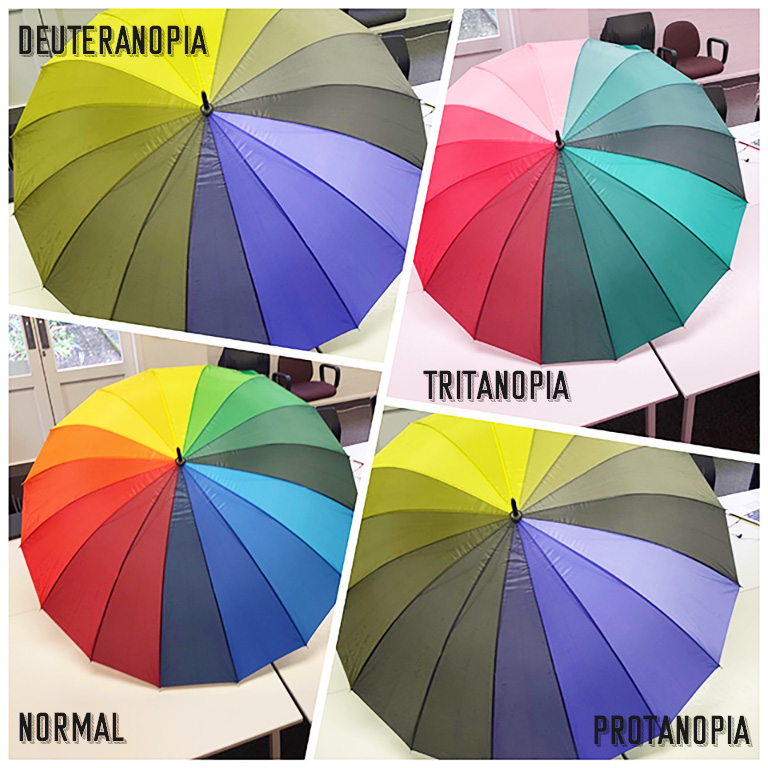
The most common form of colour blindness is known as red/green colour blindness (protanopia). Being red/green colour blindness does not mean people mix up red and green, it means they mix up all colours which have some red or green as part of the whole colour. For example, a red/green colour blind person will confuse a blue and a purple because they can’t ‘see’ the red element of the colour purple.
Red-green colour blindness is the generic term used to describe the four different types of Red/green colour blindness. Protanopia (red-blindness), Protanomaly (red-weakness), Deuteranopia (green-blindness), and Deuteranomaly (green-weakness). More than 95% of all colour-blind people suffer from a red-green colour vision deficiency. Protanopia and Deuteranopia are the most common strands plaguing peoples visions.
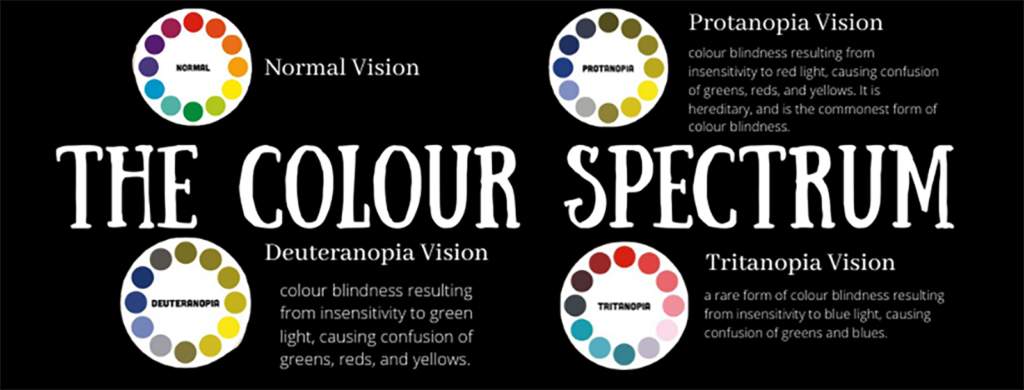
So what exact do Red/Green colour blind people see? Have a scroll through the next images to see how the other 4.5% could possibly live.
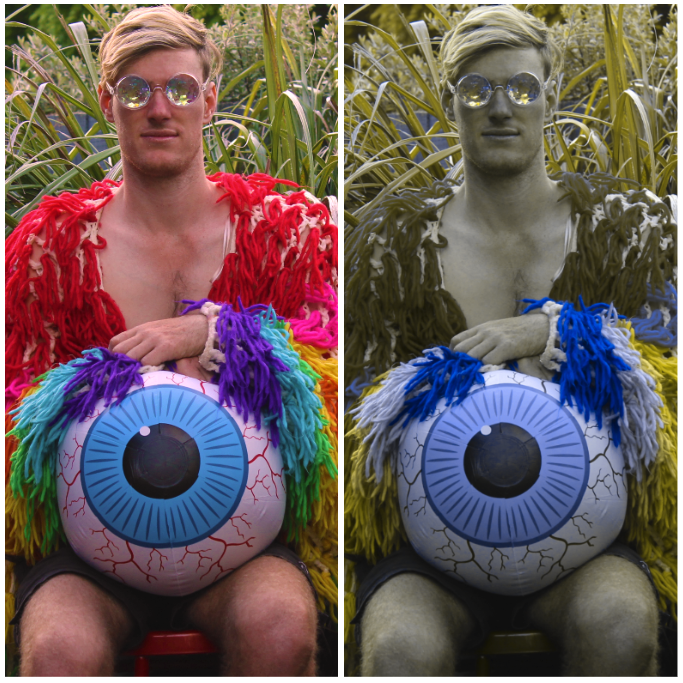


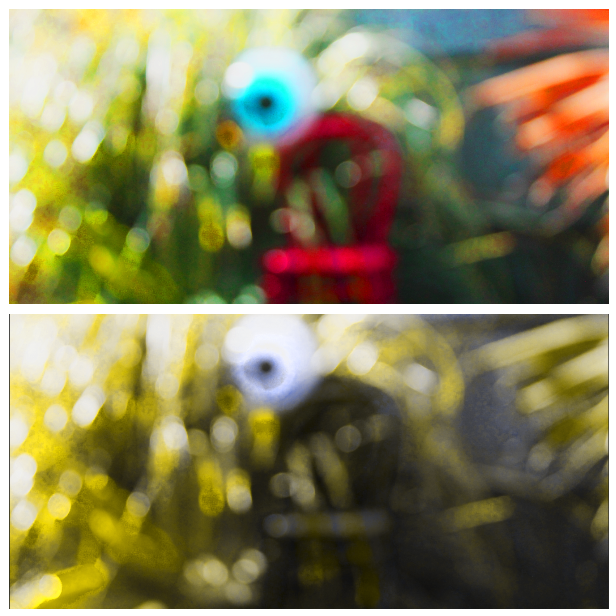

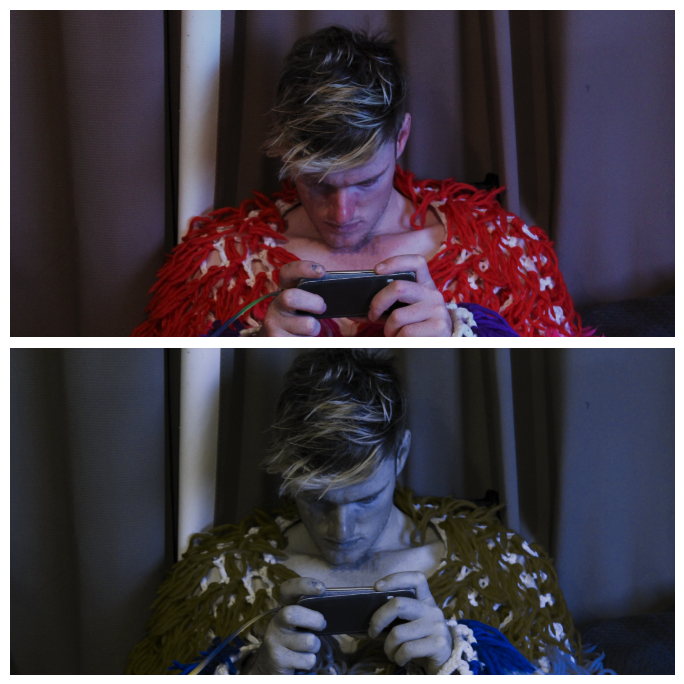
Amazing right? Can you imagine living in a tinted world? a world full of selective colours? Well this is a everyday occurrences for Hamish McDonald.
Welcome to my tinted life. Read about Hamish McDonald, a 23-year-old builder who lives a colourful life despite his Red/Green CVD.
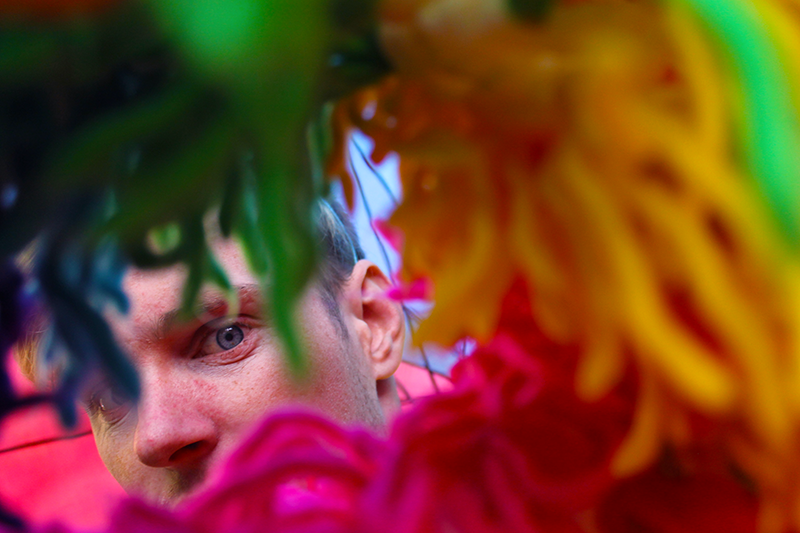
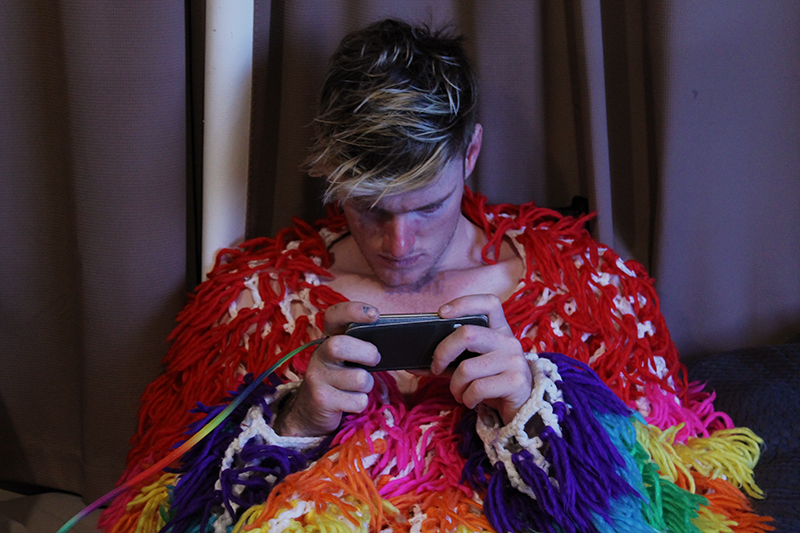
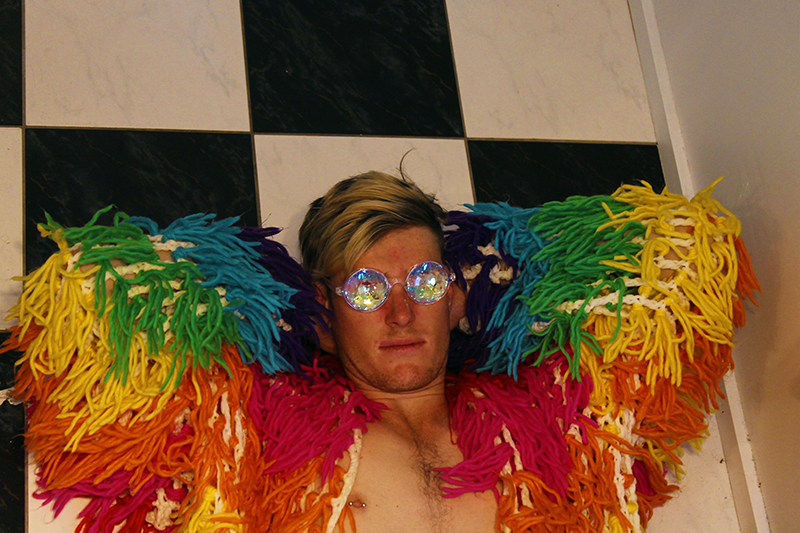
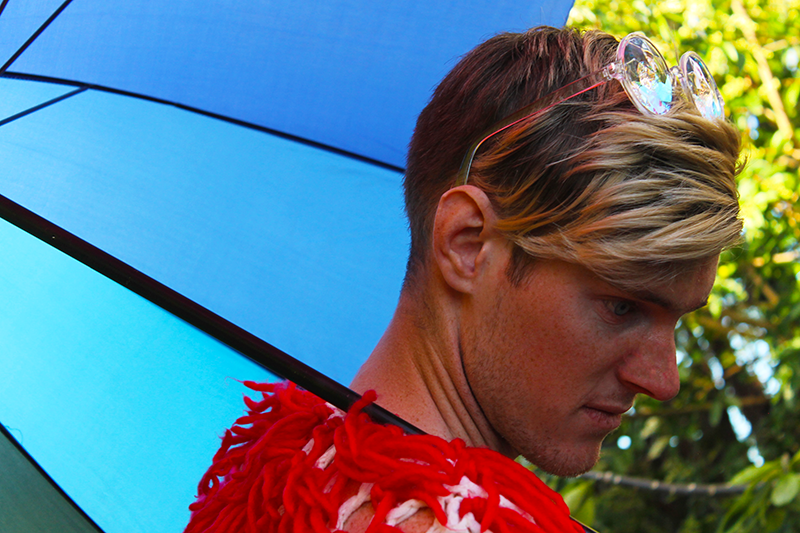


Hamish McDonald in Vibrant Colours.
Speaking on growing up with colour deficiency and colour confusion 23-year-old Tauranga builder, Hamish McDonald spoke on the matter with a maturity most seek to find. “To me it was normal. To me it was all I seen. So, I didn’t think differently of it. It’s just like our taste buds you know! We all have different ones of those. Like you see colour and probably enjoy an egg or two. Whereas my body disagrees with eggs and doesn’t see colour well. Some of us are just born wired different. That doesn’t mean we should let it define us as individuals.”
Some of us are just born wired different. That doesn’t mean we should let it define us as individuals.”
Hamish first discovered he was colour blind when he would mix up the colours when painting-by-numbers at kindergarten. “I thought I was the man, like Picasso or someone big like that. But then hello turns out I was doing some cooked as stuff”. The nurses sent him to an optometrist who made him partake in the Ishihara eye test.
The Ishihara eye test is a test for deciding colour blindness by means of a series of cards each having coloured dots that form one pattern to the normal eye and a different pattern to the eye that is colour-blind. This is the main form of identification and detection of red/green colour blindness.




The second question out of everyone’s mouth in relation to his colour deficiency is how can Hamish build and design homes with his colour deficiency? “It doesn’t affect me at all. I build with wood and plastering and all that. I don’t need colour vision, that’s the designer’s job. So, yeah it doesn’t affect me. Even if it did, I would still build because I just love building so much man. Just making something with your hands. I don’t know why, it’s just so soothing you know?”.
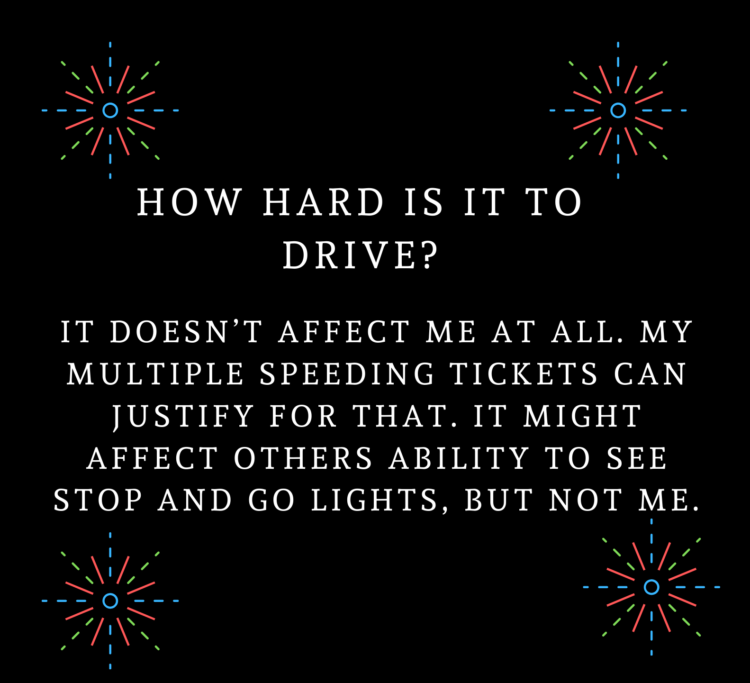
His parents would often worry that his colour deficiency would end up affecting him later in life, career wise and regarding the ability to drive. “I didn’t want to be a pilot. So, I’m good.” Pilots are one of a select few professions that you cannot do if you suffer from colour deficiency. The ability to drive? Well that is not affected at all as he drives around in a bright red Nissan 370z. “Some would say I’m over compensating. I say she’s just a beautiful green, I mean red beast that purrs like a lion.” finishing that sentence with a cheeky grin.

Hamish then went on to talk about this one time at a party when he was 17 and people started partaking in a game or two of twister. He was on the spinner and was telling people the wrong directions. He blames that on the alcohol though. “I was just tipsy. Honest. I only had one nitro that’s all.”
This incident was when many of his peers first discovered he was colourblind. Even his best friend of 14 years had no idea, Hamish hid it so well. “It was like Thor struck everyone with his hammer.” People were standing around with open mouths and blank expressions, all eager with questions and their own stories of not seeing colours. Although many of their stories were drug-induced, Hamish’s was natural.

“Newspaper Cutout” – How Hamish felt in this moment.
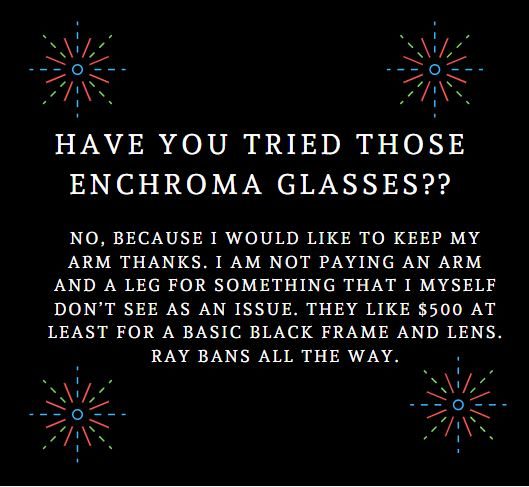
This led him to look into options to gain some of his vision back and as he put it, “I wanted to recolour my world. I wanted to see the world the way it was intended to be. I felt out-of-place as such.” This journey led to many dead ends and empty promises. Hamish was not willing to fork out over $600 for a pair of EnChroma glasses, so he went on a downloading spree and downloaded over 40 different colour blind side apps. “It was like I was possessed from an app wizard and my finger pushing the install button was my magical wand.”
“I wanted to recolour my world. I wanted to see the world the way it was intended to be. I felt out-of-place as such.”
Half the apps were not very helpful or needed a better IOS but after downloading the apps, Hamish saw what he had been blind to his whole life.
Ever since that moment Hamish promised himself that he is going to live the most colourful live he can, before his time to fade to black. He isn’t going to take this deficiency lying down. Hamish wants to inspire others to live their true colourful form. “Whether that be deep and meaningful like you find self-peace or your soulmate or literally like you take part in a colour-run. Either way just make it colourful because the only way to defeat any type of darkness with light. Darkness won’t drive out darkness.
Ending the interview, I asked Hamish, What’s the most important thing you would want people to know about being colour blind or colour deficient?
“We are normal like f*cking normal. We still live and breathe the same oxygen as you. We go to work and drive around like you guys. We still see and experience beautiful sunsets and glistening waterfalls. So, that means we can play f*cking play twister like you guys and pick out our favourite skittle flavour out of the mix. We are just like you guys. We are you.”


I need proper help Treatments and Cures.
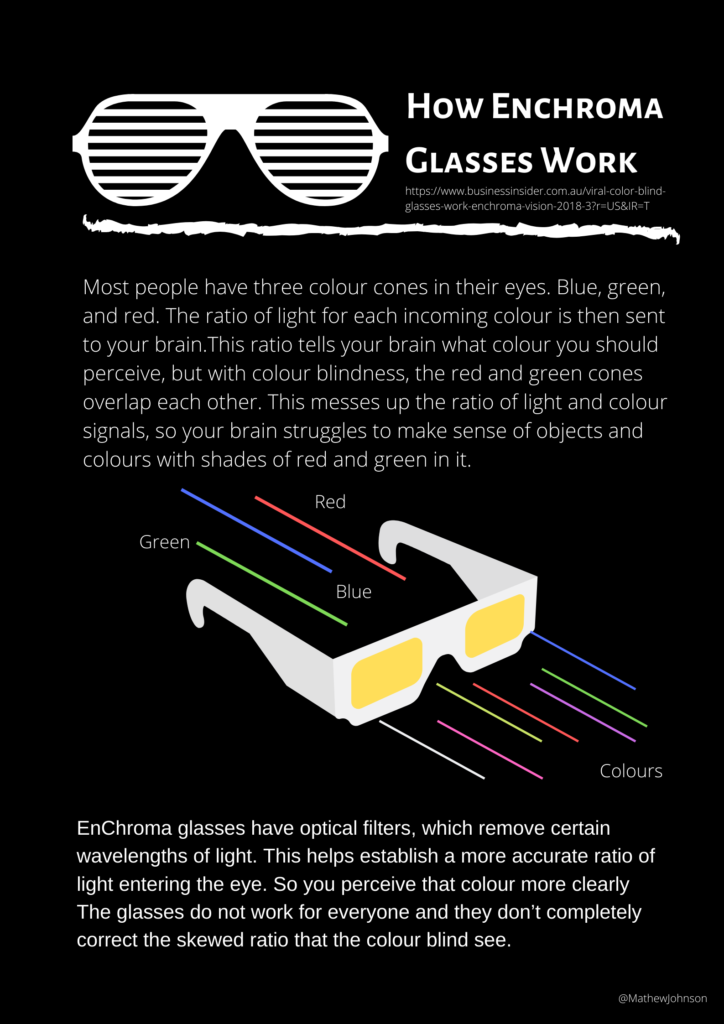
Sadly, a cure for colour deficiency is yet be discovered. Contact lenses and Enchroma glasses with selective filters offer some relief and filter out certain shades to make the world a little easier to see.
Luckily apart from the missing cones and colour confusion, an affected persons vision is usually unaffected and corrective measures are all that is required to start seeing normal colour vision.
Hamish uses blue-light glasses while gaming, but that has nothing to do with his colour deficiency. Its to help his mind tell the difference between day and night, so he can maintain a healthy sleeping schedule.
Questioning a colour deficient life.
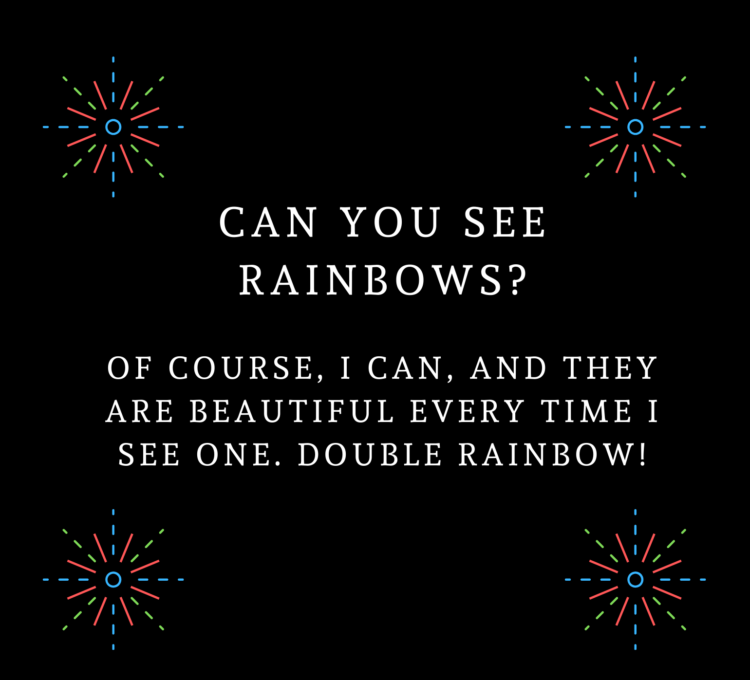
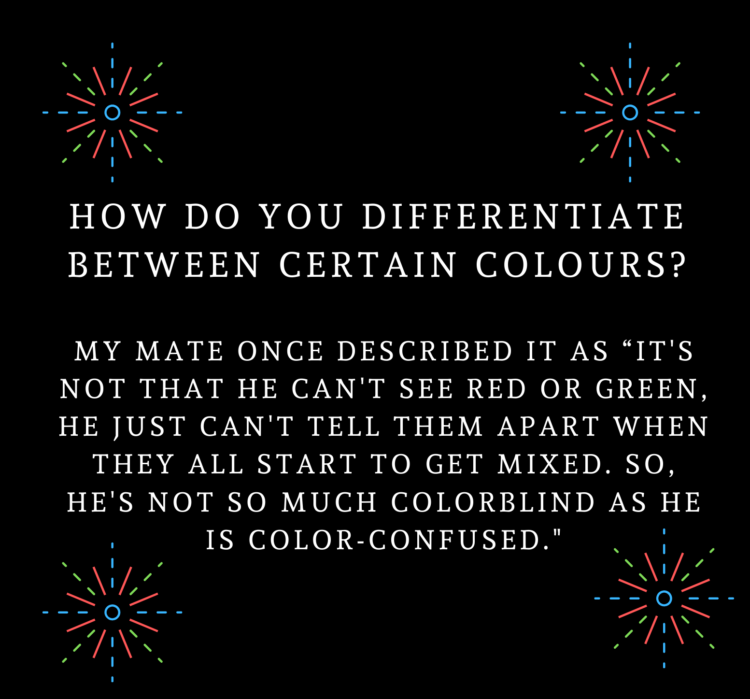
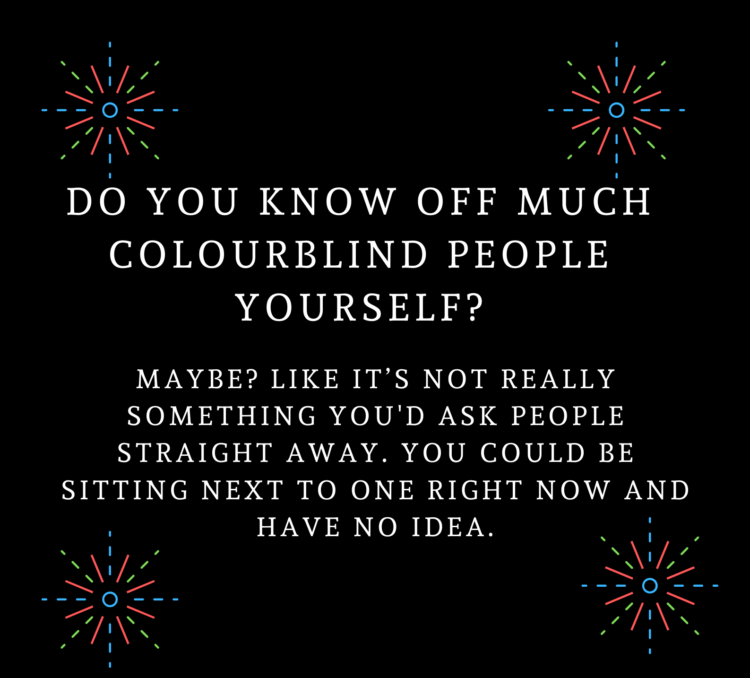
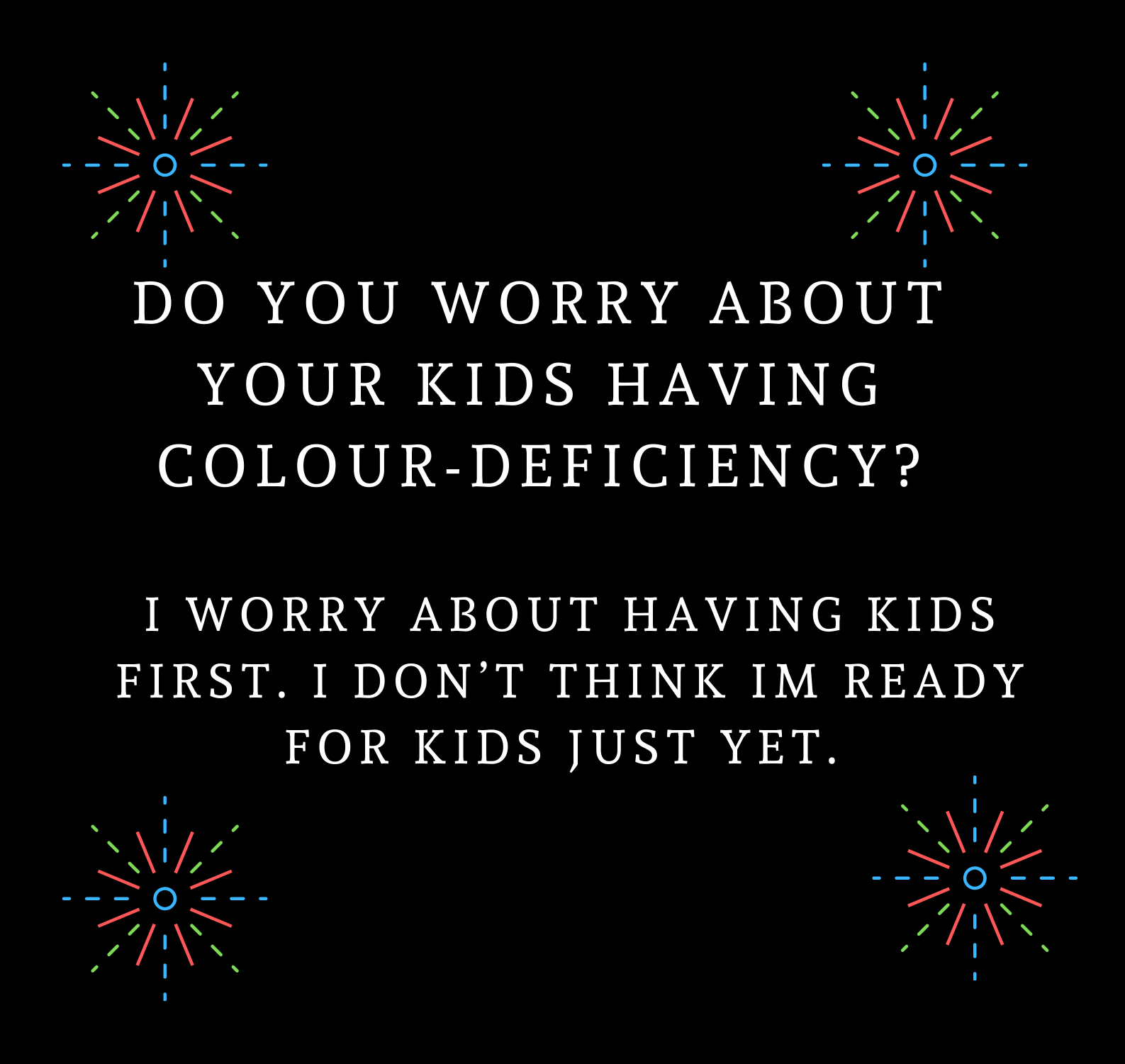
I compiled a list of questions people have been too afraid to ask a colour-deficient person before and got Hamish to shine some light on the matter.









Apps-lutely Colourful.
Hamish was kind enough to sit down and show me some applications for your smartphone that helps detect colours and to tell the difference between certain shades.
Here is his list of the best ones to use.
ColourblindGoggles gives the user the ability to simulate the eyes of a colourblind person, using their device’s camera. This app uses high performance image processing algorithms to simulate 4 kinds of colour-blindness and can show all of them at the same time for comparison with ease.
Color Mate is a basic easy to use app that detects colours you point your camera at and gives you the colour you are seeing in real-time with the ability to edit the colour palettes and saturation as well as using the 4 presets for each deficiency type. The camera quality software is not the greatest though.
Color Blind is a matching type game where you are shown a 4×5 grid with the same colour squares and you must detect the lighter shade in order to process to the next level. The game increases in difficulty as you advance. This will be good to teach younger people different colours and to also pick up on where they are lacking. If you can get past the foreign branding and fonts, this game would be a good asset in the fight against colour blindness.

Where’s the green gone?
EyeCare is an app offers you the ability to complete the Ishihara tests from the comfort of your own home. The app offers many testing assessments to get a full range of results. The constant ad popups and clique soundtrack could be distracting. You can see test results and it gives you results to the nearest 0.01% percentage on how affected to each deficiency type.
Color Test –This is another app very similar to EyeCare but less advanced and easier to use. The testing is on a simpler level and does not dig as deep. The constant ad popups are distracting and brings down the app. However, at the end of each test, it breaks down everything question and explains it for you.
Color Blind Pal – Colour Blind Pal is packed with powerful features to make sure you never need anyone else’s help seeing colours.
Visolve – This app is helpful for colour deficiencies. It makes certain colours in a photo taken by the camera (or saved in the photo album) brighter or darker, based on your criteria. For example, if you have trouble distinguishing between red and green, Visolve can make the redder colours brighter. Or it will darken all colours except the color you specify. Other options include drawing different hatch patterns on certain colours and increasing saturation of all the colours in the image.
Colorblind is for people who are colour deficient, as well as those who would like to see how colour deficient people see the world. It uses the graphics processor within your device to run advanced color manipulation algorithms, to help people distinguish colours better.
Helpful Links Helpful Links.
If you think someone you know may be affected by colour blindness have a look through this list of helpful links.
- Spec Spavers
- OPSM
- EnChroma Glasses
- Low Vision
- Paterson Burn
- NZ EnChroma Place
- NZ Ministry
- Colourblind Awareness
- Facebook Group
-
Colour Blind Survey – Made by myself.
- Colour Blind Quiz – Made by myself.
- Toptal (can show and scroll any website with a filter matched to your colour deficiency.)
- We are Colorblind
- Colour Names and Shades
- Simulator
- Learning Colours for Kids Spotify

All content created originally by Mathew Johnson (excluding the Youtube videos.)


