
Adjusting to New Zealand culture By Chan Ratanak Meang and Kellie Given
Struggling to make friends, adjusting to new foods, being scared to go shopping; these are all daily obstacles international students face as they come to terms with New Zealand culture.
Terao Tete is a nursing student at Wintec. Originally from Kiribati, she has been in New Zealand for almost three years and says she is still adapting to the different culture.
“It took me a while to adjust to New Zealand culture because I’m not much of a social person,” she says. “I find it difficult to make friends, so it took me a while to learn about the New Zealand social customs.”
I’m scared to go shopping because I don’t always understand when people talk to me
Tete says it is very easy to make friends with others back home in Kiribati, but it is not as easy here because of the diversity.
“Back at the island we know each other and it is very easy to make friends because we all know the culture. In New Zealand, it’s very hard because it’s a multi-cultural country so it’s hard to know everybody’s culture and how to adapt.”
But this does not stop her from trying. Every Monday Tete heads to her social group at Anytime Fitness in Te Rapa to mingle with other people and socialise. “It gives me more confidence,” she says.
She also belongs to a group specific to just her community. The Kiribati Waikato Association supports others from her home country with adjusting to New Zealand culture.
“I’m part of a community that helps to support people who have come to New Zealand. It helps to provide them with people to stay with and supports them with learning the English language.”
Enlarge
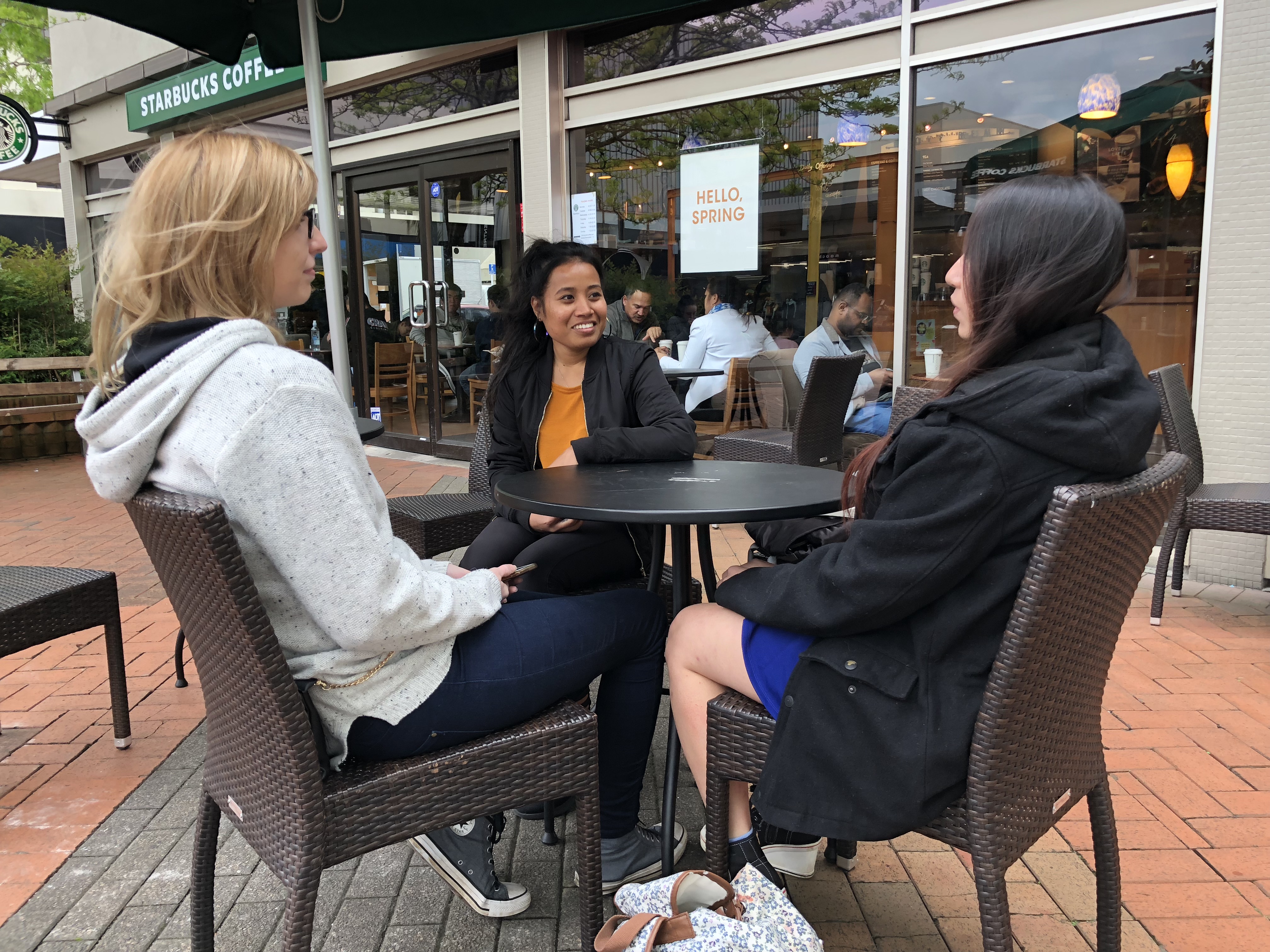
Photo: Chan Ratanak Meang
Tete says one of the biggest struggles she’s faced is adjusting to the different foods that New Zealand offers.
“New Zealand has a lot of fast food which they rely on but back home we have local foods.”
Such local foods consist of taro, toddy (drink made from a coconut), fish, and rice.
Back in Kiribati, it is common for your family to prepare your meals and make sure you’re well looked after, but in New Zealand Terao is adapting to an independent life.
“The thing that’s most difficult is the independence. Back at the island, we rely on our parents for food and other survival. Now I have to rely on myself.”
“I expect my food to be ready when I come home but I need to cook it myself and clean my room and do my own chores because my family are not around to look after me anymore.”
On top of that, daily duties like shopping become obstacles that Tete struggles to overcome.
“The biggest struggle for me is the language,” she admits. “I’m scared to go shopping because I do not always understand when people talk to me and they can’t understand me. It’s hard for me to go to the bank to get the money my family sends me because I don’t understand the language.”
“There isn’t a place that translates my community’s language so it’s very difficult. I know that there are Chinese banks and other places that cater to a specific country and culture, but there isn’t a lot for us.”
She says that while life away from home can be fun, it also has its challenges. A lot of support is given while at school but outside of Wintec, she’s often on her own, which is why she looks to community groups.
“When I first moved away from my family it was great, but eventually I started feeling very homesick. It’s really hard to live by yourself without your family.”
The struggles of finding a part-time job By Kellie Given
The idea of moving to another country is daunting enough without the added stress of finding a part-time job, which comes with a lot of difficulty for most international students.
Tanya Dodunski, who works at the Careers Department at Wintec, is responsible for helping International students cater their job applications for NZ employment and find a reliable part-time job.
“When the students come in they have a CV that has been made in their home country, which a lot of the time is quite different to what we use in NZ,” Tanya says. “I work with them to update their job applications to more of a NZ standard and make it more relevant for the NZ employment system.”
Tanya finds that most people who come to her looking for part-time jobs are international students, and that they do have great difficulty with their search.
One contributing factor is the lack of experience the students have that employers often require. The experience international students gained from their home country isn’t always relevant in NZ, and this is where they struggle.
“NZ employers want referees,” Tanya states. “When those referees are in a different country, it makes things more difficult.”
The need to find a job can be stressful and students can end up relying on it too much.
Tanya finds that most of the students focus more on getting a job rather than studying, and she advises against that.
“A lot of them do try and over commit and focus more on the employment side. We do try and tell them that study should come first and then work around that. However, I do understand that a lot of it is financial and they do need the extra money.”
Wintec student Jubayer Chowdhury, who is 26, has been in Hamilton for nine months. It took him six months to find a part-time job.
“Employers are looking at my experience, how hard I work, and my communication skills.”
He also finds that one of the biggest struggles for job searching is the lack of experience.
“In Hamilton, especially for international students, there is a real struggle to find a job because people want experience,” he says. “There are not a lot of opportunities for International students.”
“Employers are looking at my experience, how hard I work, and my communication skills.”
Jubayer works as a kitchen hand at the Italian restaurant Portofino on Victoria Street. The job roughly gives him 15 hours a week, but it depends on how busy they are.
“Now that it’s getting into summer, I’m getting more hours.”
He works every Monday, Tuesday, and Wednesday, and says that most Tuesdays are difficult because he has class in the morning and has to head to work for the evening. This cuts down his time for communicating with his family back home.
“I’m a long way from my home so it’s really hard to juggle study, work, and communication with my family.”
“It’s hard because sometimes I don’t have enough time to talk to my parents, relatives, or friends,” he says. “I manage online, but there is a 7 hour time difference. So when it’s night here, it’s daytime in my country.”
Enlarge
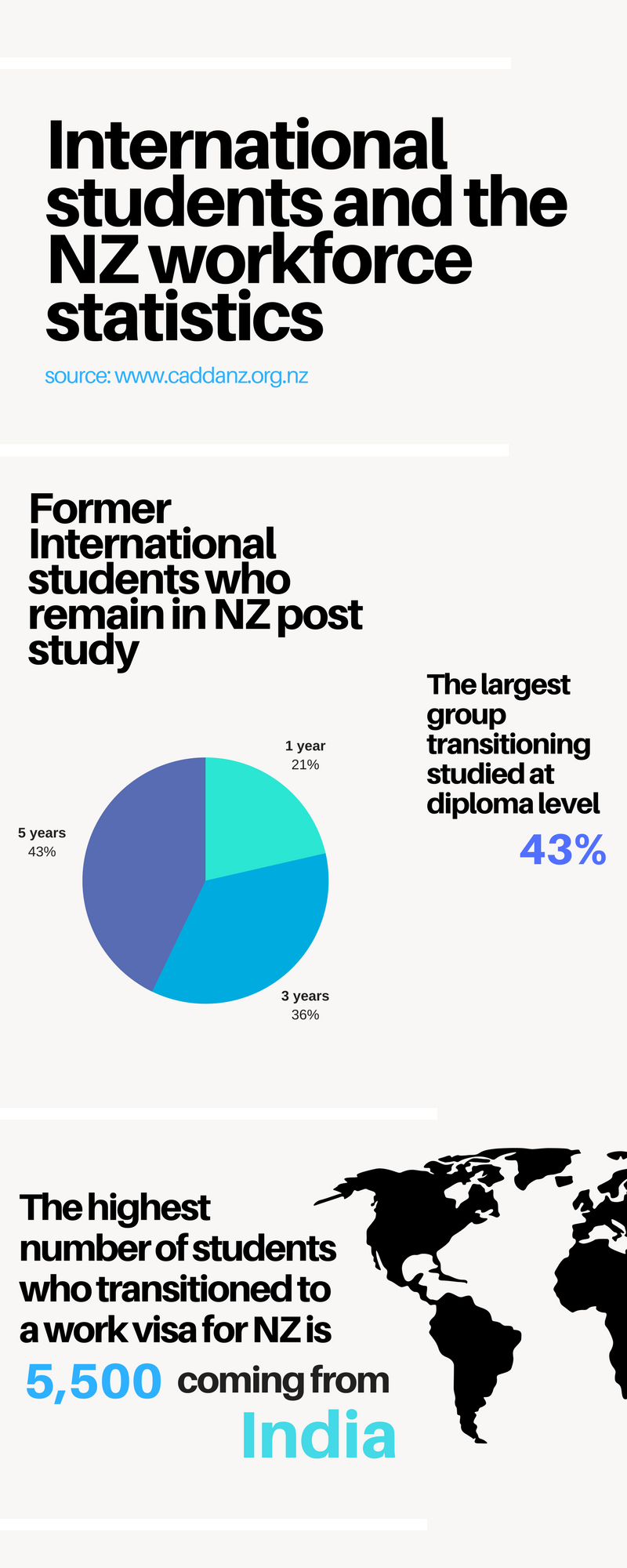
Statistics from caddanz.org.nz
When asked about his plans after graduation, Jubayer confirmed he’d like to work in NZ and get a better job than he currently has.
“I think NZ is a growing country so new jobs and companies are being created.”
If he can’t get a job here, he feels as though he’ll be well equipped back home in Bangladesh due to their demand for advertising from corporate companies.
Jacky Yu is a 25-year-old Business student at Wintec. He had to face several difficulties before he managed to adapt to the culture of New Zealand.
Living situation of International Student By Chan Ratanak Meang
Jacky found that life in New Zealand is very different from the life he is used to in China, including the environment and the day to day workings of the western culture.
I feel that people in New Zealand have a very small heart
In New Zealand, he has to be responsible for all aspects of his own life such as cooking, cleaning and laundry as he does not have his family to help him out or to give him a hand.
Language is one of the biggest barriers for him in New Zealand.
Jacky said, “I feel that people in New Zealand have a very small heart” as he feels that he is required (by culture) to do everything by himself.
They may call it ‘individuality’, but for him, it’s loneliness. He is embarrassed to speak to the local people because, many times, they do not understand his pronunciation, so he needs to frequently repeat his speech.
That is the main reason why he does not want to leave his room. He is not just scared to talk to people, but he is also scared when people talk to him as he often does not understand what they say.
Enlarge
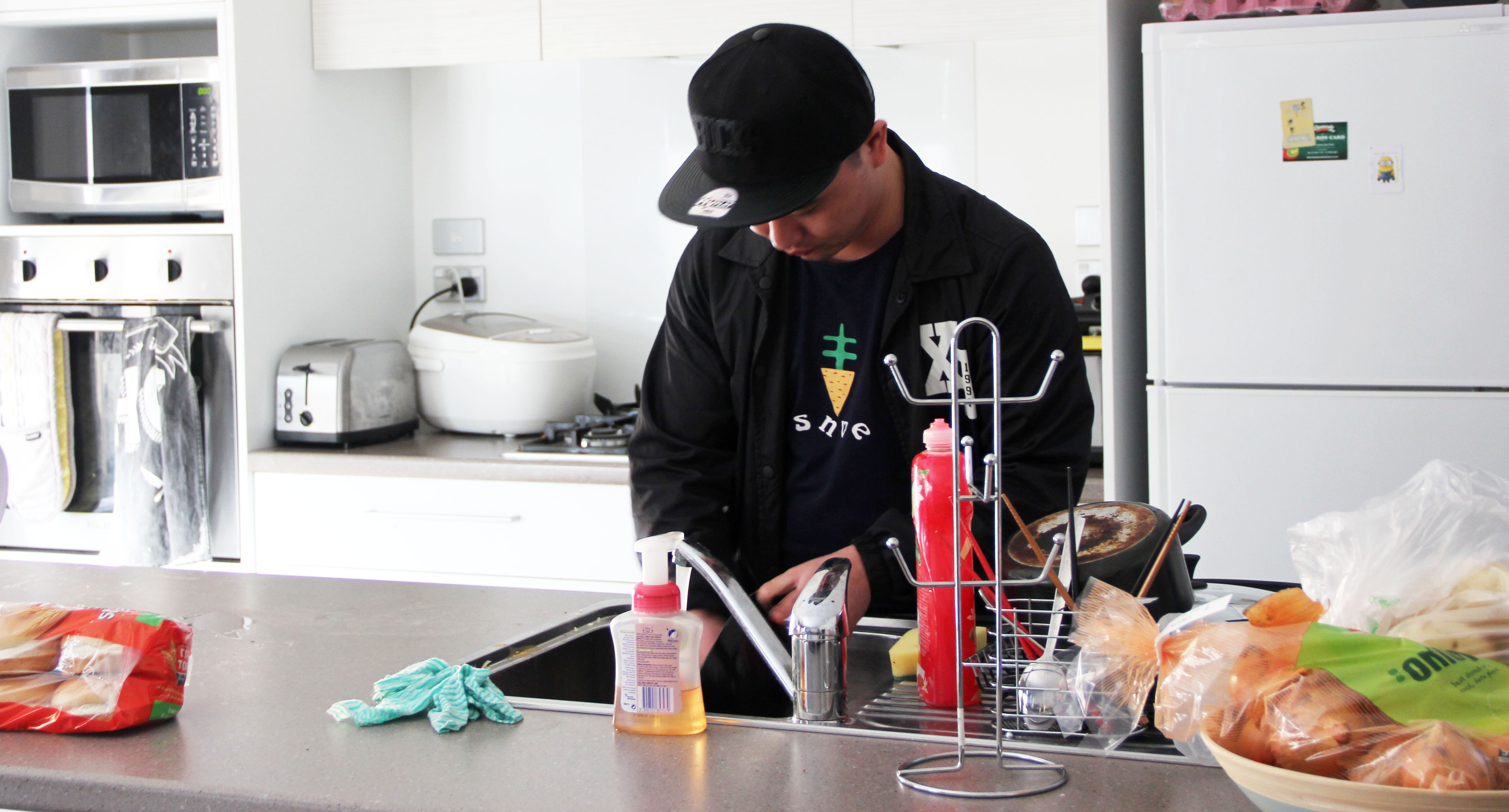
Photo: Chan Ratanak Meang
Jacky lives in an apartment at Victoria Street that he shares with five Chinese students. They need to pay NZ $700 per week. Jacky also mentioned that flatting life has some issues of its own.
For instance, sometimes people that he flats with take his food from the refrigerator without his permission. Sometimes he gets annoyed at his flatmates when they hold parties at the apartment until late at night, which prevents him from studying or sleeping.
The financial aspect is also another issue because his family has set a weekly budget for him to spend in New Zealand. He needs to buy food, share electricity and internet bills with his flatmates.
“Finding a low price accommodation in Hamilton is very difficult,” Jacky saids.
Accommodation rents are very high compared to his home country. They also need him to put a three-month deposit before moving in, requiring him to spend a lot of money during the first stages of his stay in New Zealand.
Jacky says living away from home is a huge responsibility. In China, he does not have to do anything because his parents hire a housekeeper to do all the chores in the house. He does not need to cook and to shop for food after school.
However, life in New Zealand is the opposite as he is required to do all the tasks, which have always been done by others for him. He needs to manage his time to cook after school and to also study during the night.
Jacky has the Hamilton Chinese Association to support him. The Hamilton Chinese Association is located within the Wintec City Campus.
Sun Mingyan chairman of the Association, 24, say they help the Chinese students adapt their lives and routine to the New Zealand culture.
“We share a range of experiences with the Chinese students that recently arrive in New Zealand to make the students better understand the culture and the lifestyle of the country,” he said.
They also provide information about places to visit, Chinese supermarkets and Chinese restaurants. They also help students to apply for visas and help students fill application forms that they may find difficult to understand. They often help Chinese students translate English documents.
I wish life should be more colourful,
if I have had more friends here and hung out with them,
life would be more fun
Jacky says he found life in New Zealand unique because he believes it is simpler. It is not as crowded as China. He says life in New Zealand is very secure and he feels safe. The traffic situation is also vastly better than China.
In China, one can sometimes be stuck on the highway for two to three hours at a time. In some situations, however, he feels that life can be too simple here. The lifestyle does not compare with China, and it makes him feel less vibrant.
“I wish life should be more colourful, if I have had more friends here and hung out with them, life would be more fun.”


